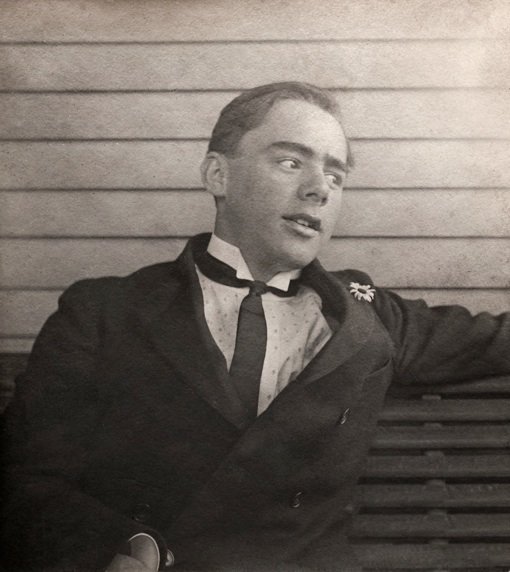
Harold Guetzkow

Harold S. Guetzkow
1915-2008
Dr. Harold Guetzkow, professor emeritus of political science, psychology, and sociology at Northwestern University, passed away on November 11, 2008, in San Jose, CA, at age 93. He was preceded in death by his wife, Lauris, whom he married in 1944. He is survived by sons James (Charlotte) and Daniel (Diana) Guetzkow, and his daughter, Gay (Howard) Ben Tre. In his seven decades of active scholarship, he distinguished himself as a vibrant and path-breaking scholar as well as an incredibly talented mentor.
Harold Guetzkow was born in 1915 in Milwaukee. At the age of 15, Harold accompanied his ailing father to Austria. During this visit the family traveled throughout Europe, documenting his visits on a black and white movie camera. After visiting the battlefields and graveyards that scarred the fields of Verdun, France, he became opposed to killing men fighting for another nationality, and he became interested in the decisions that stood behind war. He sold the family construction business in Milwaukee and headed to college. On his way to freshman orientation at the University of Chicago (UC), he met another UC freshman who was to be an important colleague throughout his career, Herbert Simon. Harold taught high school biology for several years in Milwaukee after his graduation.
During World War II, Harold applied for and received status as a conscientious objector (CO). This was based on a deep conviction of the necessity to evaluate of all sides of any serious debate. As a CO, he was working in the Civilian Conservation Corps in northern Michigan. In 1943 he transitioned to resident psychologist at the Laboratory of Physiological Hygiene in the Medical School at the University of Minnesota. In anticipation of the end of the war, and the need to return starving civilians to health in Europe and elsewhere, the laboratory used 36 COs to conduct the Minnesota Starvation Experiment. This lead to Harold’s first book, written with P. H. Bowman, Men and Hunger: A Psychological Manual for Relief Workers, (1946). The Minnesota experiments are widely credited with discrediting the idea that bed rest is a helpful recovery strategy as well as the benefits of high-quality protein versus carbohydrates in recovery diets.
Harold Guetzkow began graduate school in psychology at the University of Michigan after the war, graduating in 1948. His doctoral thesis established the idea of changing context in problem-solving behavior via a series of experiments. After completing his Ph.D, Harold stayed at the University of Michigan as an assistant professor, guiding the Conference Research Project, where he focused on group decision making and information networks in task-oriented committees and groups. During this period, he wrote the classic article, "Long Range Research in International Relations.
At Herb Simon’s invitation, in 1950 he joined the faculty at the Carnegie Institute of Technology, directing the Social Science Laboratory, collaborating to create the field that came to be known as organizational theory. During the early 1950s, summers were spent at the Center for Research on World Political Institutions at Princeton; during this time he wrote his prescient, landmark study, "Multiple Loyalties."
In 1956-57 a sabbatical at the Center for Advanced Study in the Behavioral Sciences in Palo Alto led to his development of the InterNation Simulation, which became a widespread vehicle for pedagogy and research in world politics, focusing on simulated decision making in a hypothetical world. In 1957 he took up joint appointments in political science, psychology, and sociology at Northwestern University, co-directing the International Relations Program. This period was very productive for Harold, yielding landmark books in organizational theory, social psychology, and simulation sciences. From 1958-62 he spent one day a week at the University of Chicago directing a program on Executive Judgment in the business school. Throughout the 1960s and early 1970s he developed and supported the transition to all computer simulations. These efforts, known as the Simulated International Processes project, were widely influential in international relations and led to the volume Simulated International Processes: Theories and Research in Global Modeling (1981). During his final years at Northwestern, Harold began to visit scholars in other continents to spread the idea of collaborative computer simulations for international relations scholarship, a project he termed "Five-Continents project."
After an active and influential career, Harold retired from Northwestern University in 1985, having been feted at the 1985 International Political Science Association meetings with the presentation of a festschrift, Theories, Models, and Simulations in International Relations: Essays in Honor of Harold Guetzkow (1985). After this graduation from Northwestern University, he and Lauris moved to Sunnyvale, CA, and he took up a project focused on the study of values as they affect decision making in the international arena. He began a study of cultural values in decision making with scholars at the Pacific School of Divinity and also began a productive relationship with Kent Kille who brought the project to culmination in 2007 with the publication of The UN Secretary-General and Moral Authority: Ethics and Religion in International Leadership (2007).
A memorial academic symposium is being planned for the latter part of 2009 at Northwestern University. Donations may be made to Northwestern University, for the purposes of the Harold Guetzkow Prize Fund, Weinberg College of Arts and Sciences, International Studies Program, 897 Sheridan Road, University Hall, Room 20, Evanston, IL 60201. A memorial website is planned at www.haroldguetzkow.info.
Michael D. Ward (University of Washington) and Daniel Guetzkow (on behalf of the family)
The following obituary was published in “ASA Footnotes”, a publication of the American Sociological Association.